
Quick Answer
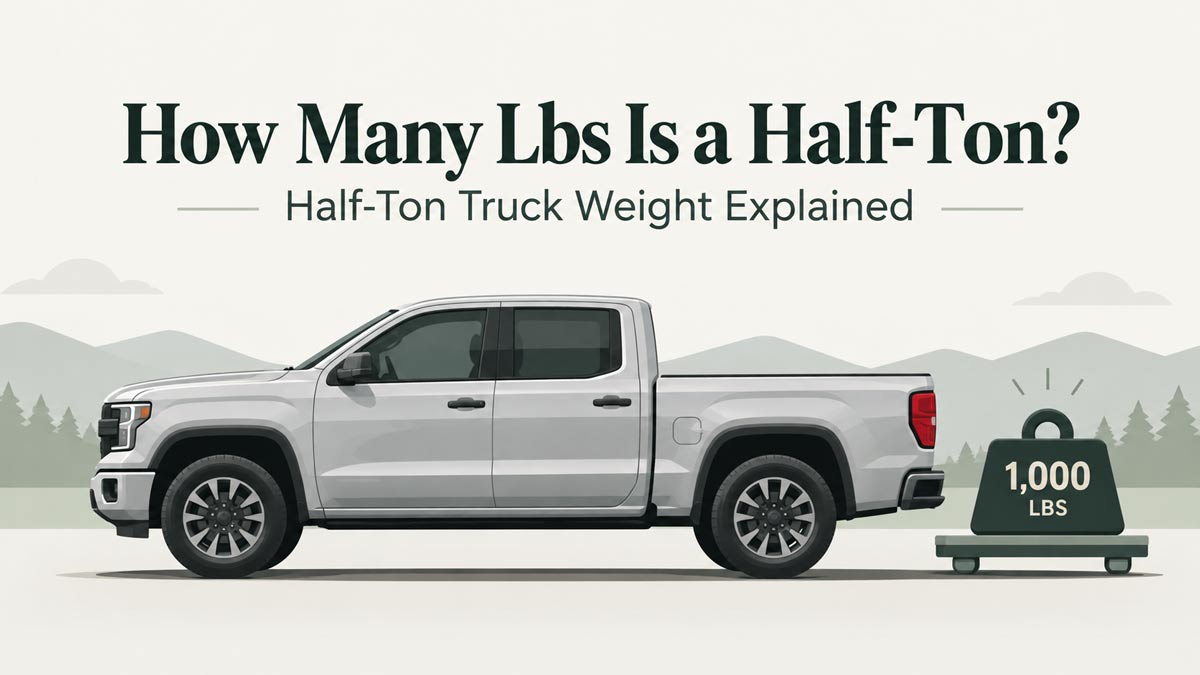
A half ton is 1,000 lbs. In the U.S., a “ton” means the short ton of 2,000 lbs, so a quarter ton is 500 lbs, a three-quarter ton is 1,500 lbs and a one ton is 2,000 lbs. A “half-ton truck” is a different thing: it is a class name for full-size light-duty pickups like the F-150, Silverado 1500, Ram 1500 and Tundra. Those trucks weigh roughly 4,400 to 6,200 lbs empty and can legally weigh about 6,200 to 7,800 lbs fully loaded, depending on model and build.
Most of today’s half-tons can carry 1,400 to 2,400 lbs of payload — not 1,000. But payload, not curb weight, is the number that decides whether you can tow your trailer.
How Many Pounds Is a Ton, Half Ton and Quarter Ton?
The truck names borrow from the U.S. short ton. NIST, the federal measurement agency, lists the short ton as exactly 2,000 lbs. Here is the conversion for every size you will hear at a dealership:
| Term | Pounds | Kilograms (approx.) | Truck class it names |
|---|---|---|---|
| Quarter ton | 500 lbs | 227 kg | Old compact pickups; rarely used today |
| Half ton | 1,000 lbs | 454 kg | F-150, Silverado 1500, Sierra 1500, Ram 1500, Tundra |
| Three-quarter ton | 1,500 lbs | 680 kg | F-250, Silverado 2500HD, Ram 2500 |
| One ton | 2,000 lbs | 907 kg | F-350, Silverado 3500HD, Ram 3500 |
A metric tonne is 1,000 kg (about 2,205 lbs). A British long ton is 2,240 lbs. Neither is used for U.S. truck classes.
The names stuck around from early pickups, when a half-ton truck was roughly a truck rated to carry about half a ton in the bed. Trucks got stronger, the labels did not change, and the model numbers (150, 1500, 250, 2500) took over the same job.
How Much Does a Half-Ton Truck Weigh?
There are two weights that matter, and people mix them up all the time:
- Curb weight is the truck empty, with full fuel and fluids, no people and no cargo.
- GVWR (gross vehicle weight rating) is the most the truck is allowed to weigh with everything in it: you, your passengers, gear, and the trailer’s tongue weight.
Here are 2026 numbers straight from the manufacturers:
| 2026 half-ton | Curb weight range | GVWR range |
|---|---|---|
| Ford F-150 (gas and hybrid) | 4,396 – 5,608 lbs | 6,220 – 7,400 lbs |
| Toyota Tundra | 5,205 – 6,230 lbs | 6,990 – 7,780 lbs |
| Ram 1500 Crew Cab 5’7″ 4×4, Hurricane SO | about 5,260 lbs* | 7,100 lbs |
Ford 2026 F-150 Body Builders Layout Book; toyota.com 2026 Tundra specs; Ram 2026 payload chart. *Ram doesn’t list curb weight on its chart; this is GVWR minus published payload.
The light end is a regular cab, two-wheel-drive work truck with a small engine. The heavy end is a crew cab 4×4 with a hybrid powertrain or a luxury trim. A typical crew cab 4×4 family truck sits around 5,100 to 6,000 lbs empty.
So if someone asks “how heavy is a half-ton truck,” the honest answer is about two and a half to three tons empty. The “half ton” has nothing to do with what it weighs.
How Much Can a Half-Ton Truck Carry?
Payload is GVWR minus curb weight. It is everything you can add to the truck — people, gear, hitch hardware and tongue weight — before you go over the limit.
| 2026 half-ton (crew cab 4×4, short bed) | Published payload |
|---|---|
| Ford F-150 3.5L EcoBoost | 1,905 lbs |
| Ram 1500 3.0L Hurricane SO | 1,840 lbs |
| Toyota Tundra SR5 | 1,710 lbs |
| Toyota Tundra Capstone | 1,420 lbs |
Published payloads are best-case for that configuration. Optional equipment lowers them.
Maximum payloads go higher — Ford advertises up to 2,440 lbs and Ram up to 2,360 lbs — but those are regular-cab or quad-cab two-wheel-drive trucks. The truck in your driveway has its own number printed on the yellow Tire and Loading Information sticker in the driver’s door jamb. That is the one to trust.
What About a 3/4-Ton Truck?
A three-quarter ton is 1,500 lbs, but just like the half-ton, the 3/4-ton truck class has outgrown its name. Heavy-duty trucks are heavier empty and carry far more:
| 2026 3/4-ton example | GVWR | Published payload | Curb weight (implied) |
|---|---|---|---|
| Ram 2500 6.4L HEMI Crew Cab 6’4″ 4×4 | 10,000 lbs | 3,320 lbs | about 6,680 lbs |
| Ram 2500 6.4L HEMI Crew Cab 6’4″ 4×4 | 9,900 lbs | 3,210 lbs | about 6,690 lbs |
| Ram 2500 6.7L Cummins Crew Cab 6’4″ 4×4 | 10,000 lbs | 2,260 lbs | about 7,740 lbs |
| Ford F-250 (camper chart range) | 9,900 – 11,400 lbs | about 1,440 – 3,800 lbs* | varies |
Ram 2026 HD payload chart; Ford 2026 towing guide. *Ford’s figure is a slide-in camper cargo rating that already assumes 150 lbs in every seat.
Notice the diesel. The Cummins adds about 1,000 lbs of engine and hardware, so it carries less payload than the gas HEMI in the same cab. That trade-off is common across heavy-duty trucks. Our half-ton vs 3/4-ton towing breakdown covers what else changes: brakes, axles, springs and frame.
Not sure if your truck is within safe limits? Towing Limit Pro helps you verify your real setup using your actual payload sticker, passengers, cargo, and trailer numbers.
- Remaining payload (what you actually have left)
- Realistic tongue weight estimate (loaded, not brochure)
- GVWR margin + a clear safety buffer
- Risk-zone warning if your setup is pushing limits
Tip: Use your truck’s yellow door sticker payload for the most accurate result.
Worked Example: Same Trailer, Half-Ton vs 3/4-Ton
Here is why the weight class matters more than the name. Take a 7,000 lb loaded travel trailer — a mid-size family bunkhouse with water, propane and gear on board — and put it behind a 2026 half-ton and a 2026 3/4-ton.
- Driver + passenger: 340 lbs
- Gear in the cab and bed (cooler, tools, chairs, firewood): 200 lbs
- Weight-distribution hitch head and bars: 75 lbs (an example; check your hitch’s spec)
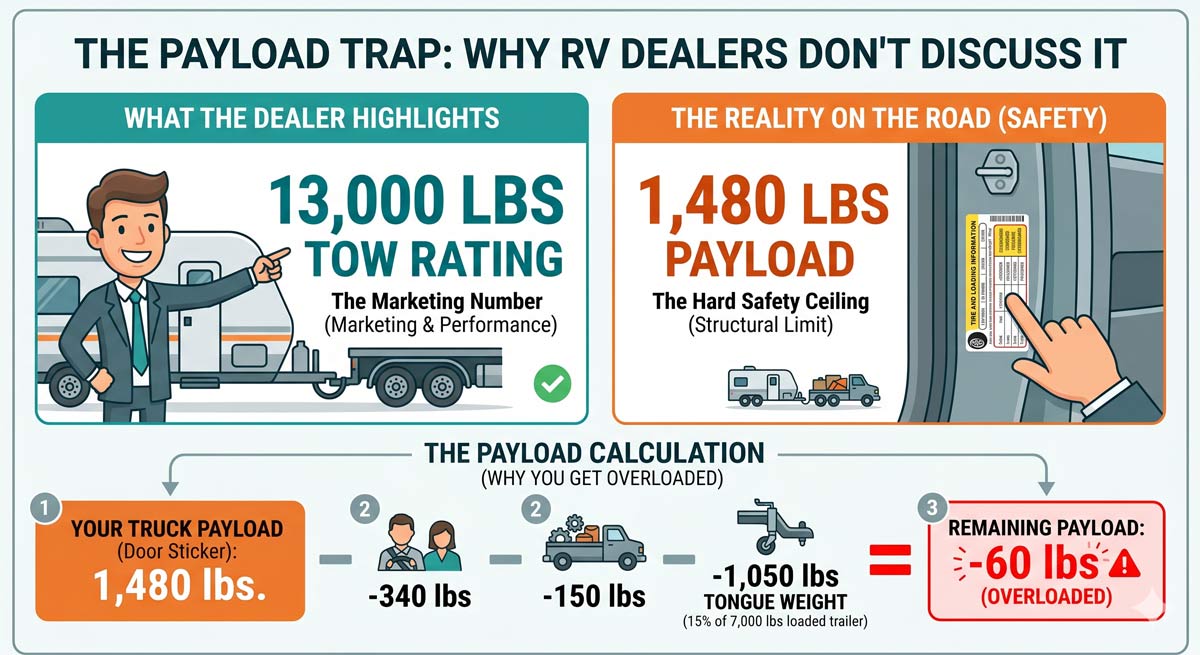
- Tongue weight at 15% of a 7,000 lb loaded trailer: 1,050 lbs
| Item | F-150 3.5L SuperCrew 4×4 | Ram 2500 HEMI Crew 4×4 |
|---|---|---|
| Published payload | 1,905 | 3,210 |
| Driver + passenger | −340 | −340 |
| Cab and bed gear | −200 | −200 |
| WD hitch hardware | −75 | −75 |
| Tongue weight (15% of 7,000) | −1,050 | −1,050 |
| Remaining payload | +240 lbs | +1,545 lbs |
| Verdict | Near | Within |
How we label the result: Within means 300+ lbs of payload left, Near means 0–299 lbs left, and Over means the truck is past its payload rating before it leaves the driveway. 300 lbs sounds like a lot until you add one more passenger, a full fresh-water tank that shifts tongue weight forward, or a bed full of firewood.
The half-ton technically works, with 240 lbs to spare on a best-case sticker. Add two kids and a dog, or an option package that trims the sticker by 200 lbs, and it tips toward Over. The 3/4-ton barely notices the same trailer. That is the decision our should-you-upgrade-to-a-3/4-ton payload math walks through in detail.
How to Find Your Truck’s Real Weight and Payload
- Read the yellow door-jamb sticker. “The combined weight of occupants and cargo should never exceed XXXX lbs” is your truck’s payload as it left the factory.
- Read the white certification label. It lists GVWR and axle ratings (GAWR) for your exact truck.
- Weigh it. A trip across a certified scale with a full tank and your usual gear shows your real weight. Subtract that from GVWR and you know what you have left. Here is how to weigh your truck and trailer at a CAT scale.
- Account for anything added later. A tonneau cover, bed rack, toolbox or bigger tires all come out of payload, and the sticker doesn’t know about them.
New to the numbers? Start with our payload basics guides.
Want to run your own numbers? Towing Limit Pro does this subtraction with your door-sticker payload, your passengers and your loaded trailer. The calculator works offline at the campground, and when you have signal the built-in AI assistant can explain the result in plain English and answer follow-up towing questions.
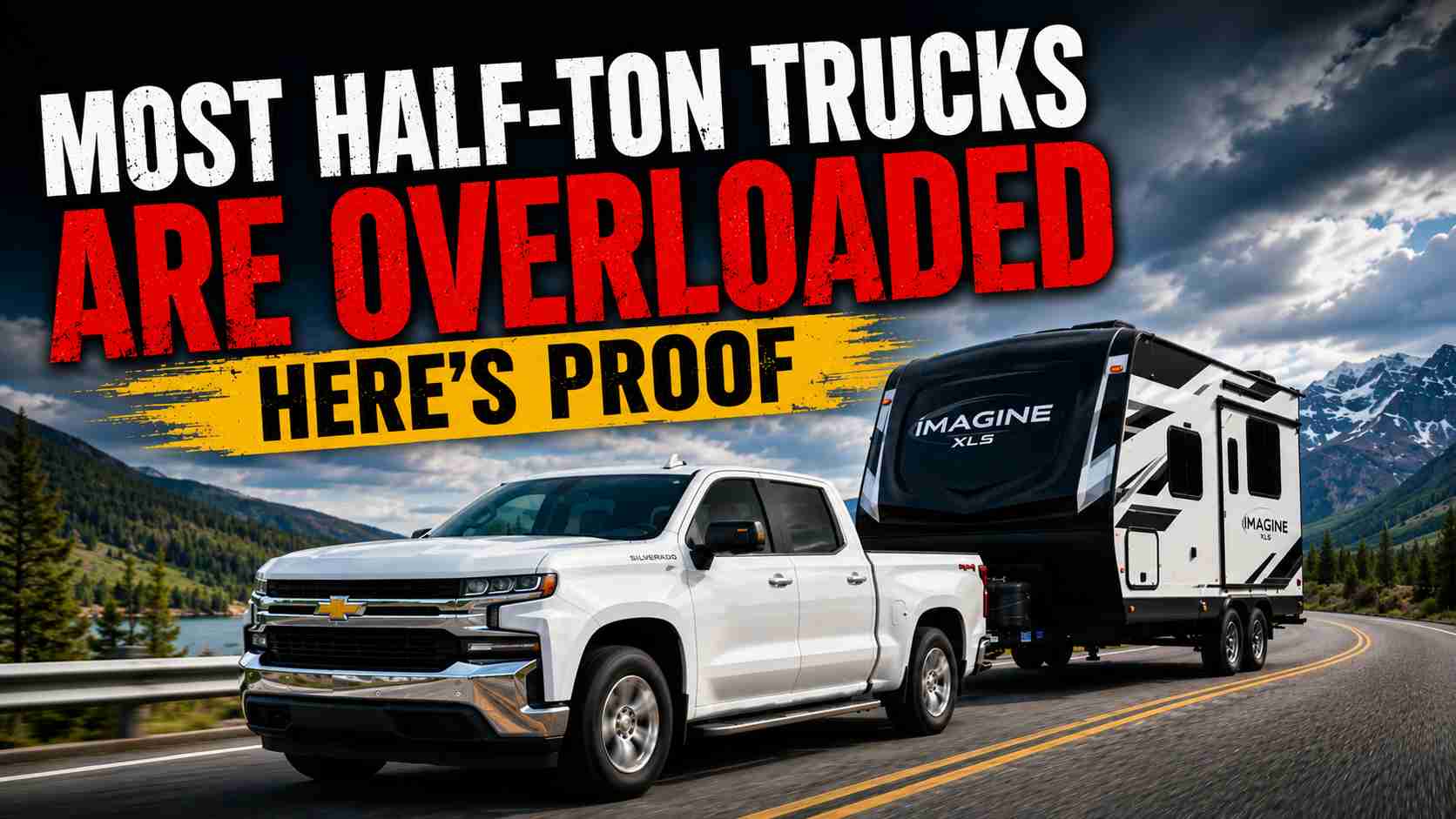
Most half-ton trucks hit their payload limit long before they hit their tow rating limit — and most owners don’t realize it until they’re already committed. Verify your exact setup and know where you stand.
- Remaining payload (your real limit)
- Realistic tongue weight (loaded)
- GVWR margin + safety buffer
- Clear risk-zone indicator
Best results: use your yellow door-sticker payload number and your loaded trailer estimate (not dry weight).
FAQs
A half ton is 1,000 lbs, because a U.S. short ton is 2,000 lbs. That is about 454 kg.
A three-quarter ton is 1,500 lbs (about 680 kg). A 3/4-ton truck, though, typically weighs 6,500–7,800 lbs empty and many can carry well over 2,000 lbs of payload.
A quarter ton is 500 lbs, or about 227 kg.
Yes. Most 2026 half-tons are rated for roughly 1,400–2,400 lbs of payload depending on cab, bed, engine and trim. Check your door sticker for your exact number.
Yes. “Half-ton” is the class nickname for the 150/1500 series: F-150, Silverado 1500, Sierra 1500, Ram 1500 and the Toyota Tundra, which competes in the same class.