

The Math That Decides Whether It’s Safe
The Ford F-150 2.7L EcoBoost is one of the most popular half-ton pickup trucks on the road. A tow rating of up to 9,000 pounds depending on configuration. Excellent fuel economy for a truck. And a loyal owner base that tows everything from utility trailers to full-size travel trailers. On paper, a 30ft trailer sounds well within reach.
But here’s the calculation most F-150 owners skip: they check the tow rating, confirm the trailer is under it, and hook up. That process misses the actual limit. The one that’s printed inside the driver’s door. The one that controls whether the F-150’s chassis, tires, and brakes are operating inside their rated parameters.
This article runs that calculation with real numbers. A 2024 F-150 XLT SuperCrew 4×4 with the 2.7L EcoBoost. A 30-foot travel trailer at realistic loaded weight. And the math that tells you whether you’re safe or over.
Tow Rating vs Payload: Two Different Limits
Tow rating is the maximum load your F-150 can pull behind it under ideal conditions, with the correct hitch equipment, on level ground. It’s the number Ford uses in advertising because it’s high and it sells trucks. A 9,000-pound tow rating sounds impressive. It is.
Payload capacity is different. It’s the maximum weight the F-150’s structure can carry — everything in the cab, everything in the bed, and the portion of the trailer’s weight that transfers to the hitch ball. It comes from a yellow sticker inside your driver’s door, not the spec sheet. And it’s almost always lower than owners expect.
For a 2024 F-150 XLT SuperCrew 4×4 with the 2.7L EcoBoost, that door sticker payload is typically around 1,520 lbs. That number varies by exact configuration, so yours may differ slightly. The door sticker is the authoritative source — not any spec sheet or online calculator.
| Payload Capacity: 1,520 lbs — Source: Door Sticker |
What Counts Against Your Payload
Before a single mile is driven, three categories of weight consume your payload budget. Most owners underestimate at least one of them.
Driver and Passengers
Two adults in the cab at a conservative combined weight of 350 pounds. This is the starting deduction. You’re now at 1,170 lbs before anything else is counted.
Gear and Cargo in the Truck Bed
For a typical 30ft trailer towing setup: a weight distribution hitch assembly, sway control bar, chains, tie-down straps, and miscellaneous camping gear carried in the truck bed. A conservative estimate is 200 pounds. Down to 970 lbs remaining.
Tongue Weight
This is the number that changes everything. Tongue weight is the downward force the trailer’s coupler exerts on the truck’s hitch ball. It counts directly against the F-150’s payload capacity. Industry standard calculates tongue weight at 15% of the trailer’s loaded — not dry — weight. This distinction is critical.
Dry Weight vs. Loaded Weight: The Calculation Most Towing Guides Get Wrong
A 30-foot travel trailer typically has a dry weight in the range of 7,200 to 7,800 pounds depending on manufacturer and floor plan. Dry weight is the trailer as it leaves the factory with empty tanks and no gear. Loaded weight — the only weight that matters when calculating tongue weight and safety — includes all fresh water (typically 40 to 60 gallons for a trailer this size, adding 335 to 500 pounds), food and supplies for a trip, clothing and personal gear for the family, recreational equipment such as bikes or outdoor gear, and any aftermarket equipment added to the trailer.
A realistic loaded weight for a 30ft travel trailer is approximately 8,200 lbs. That’s a conservative estimate that assumes a full fresh water tank and typical trip gear. The actual weight on a real trip is often higher.
Running the Tongue Weight Calculation
At 15% of 8,200 lbs loaded, the tongue weight is 1,230 lbs. One thousand two hundred thirty pounds coming directly out of the F-150’s payload capacity.
The Full Payload Calculation
Starting with 1,520 lbs of payload from the door sticker:
| Payload Capacity (door sticker) | 1,520 lbs |
| – Driver + Passenger (2 adults) | – 350 lbs |
| – Gear / Cargo in Pickup Truck Bed | – 200 lbs |
| – Tongue Weight (15% of 8,200 lbs loaded trailer) | – 1,230 lbs |
| = Remaining Payload Margin | -260 lbs |
| REMAINING PAYLOAD: -260 LBS OVERLOADED |
Not sure if your truck is within safe limits? Towing Limit Pro helps you verify your real setup using your actual payload sticker, passengers, cargo, and trailer numbers.
- Remaining payload (what you actually have left)
- Realistic tongue weight estimate (loaded, not brochure)
- GVWR margin + a clear safety buffer
- Risk-zone warning if your setup is pushing limits
Tip: Use your truck’s yellow door sticker payload for the most accurate result.
Negative two hundred sixty pounds. The F-150 is over payload before the truck moves. Not at the limit. Past it. There is no margin here — there’s a deficit.
This setup isn’t a borderline case that requires careful weight management. It’s a setup that exceeds the F-150’s rated payload capacity before accounting for any variation in trailer weight, additional passengers, or mid-trip provisioning.
What Over Payload Means in Practice
The payload rating exists because the F-150’s chassis, suspension, tires, and brakes are engineered to rated load limits. Exceeding the payload rating doesn’t mean the truck immediately fails — it means you’re operating outside the parameters the vehicle was designed and tested to handle.
The practical consequences of sustained payload overload include reduced braking effectiveness as the additional weight demands more from brake components rated for a lighter load, increased risk of trailer sway because the hitch point is bearing more downward force than rated, accelerated wear on rear suspension components, rear tires, and the hitch receiver, and potential voiding of Ford’s limited warranty coverage on overloaded components. None of these consequences are hypothetical. They’re the predictable outcomes of operating outside engineering specifications.
Verdict: Can the F-150 2.7L EcoBoost Tow a 30ft Trailer?
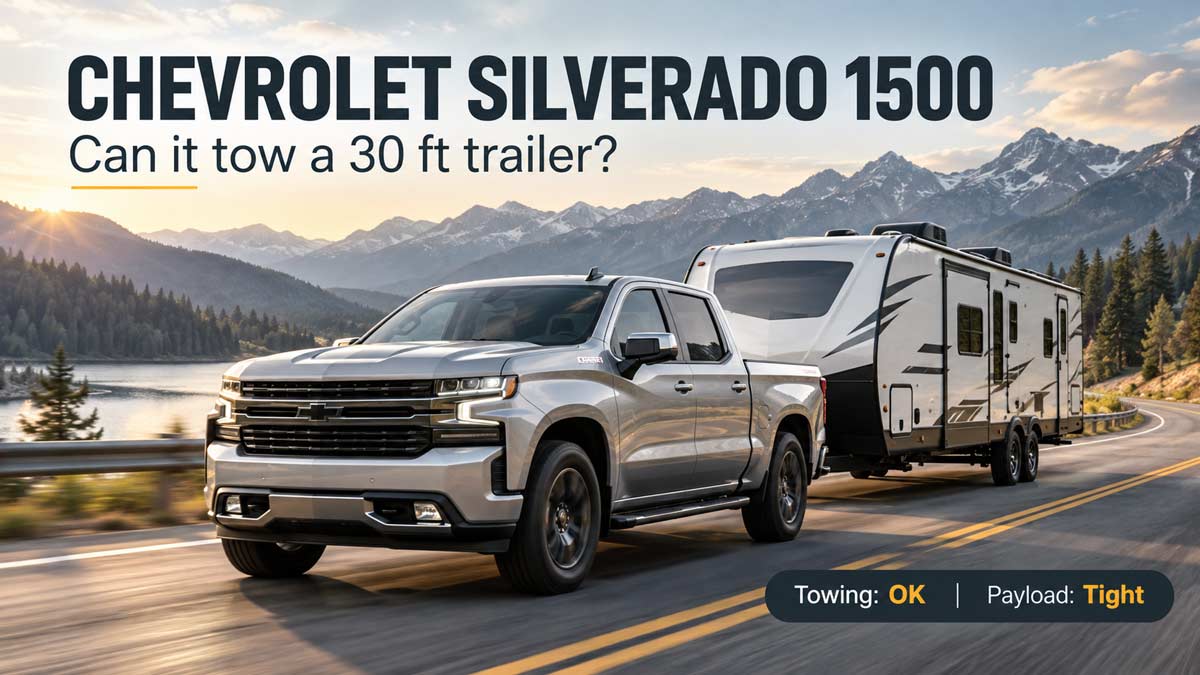
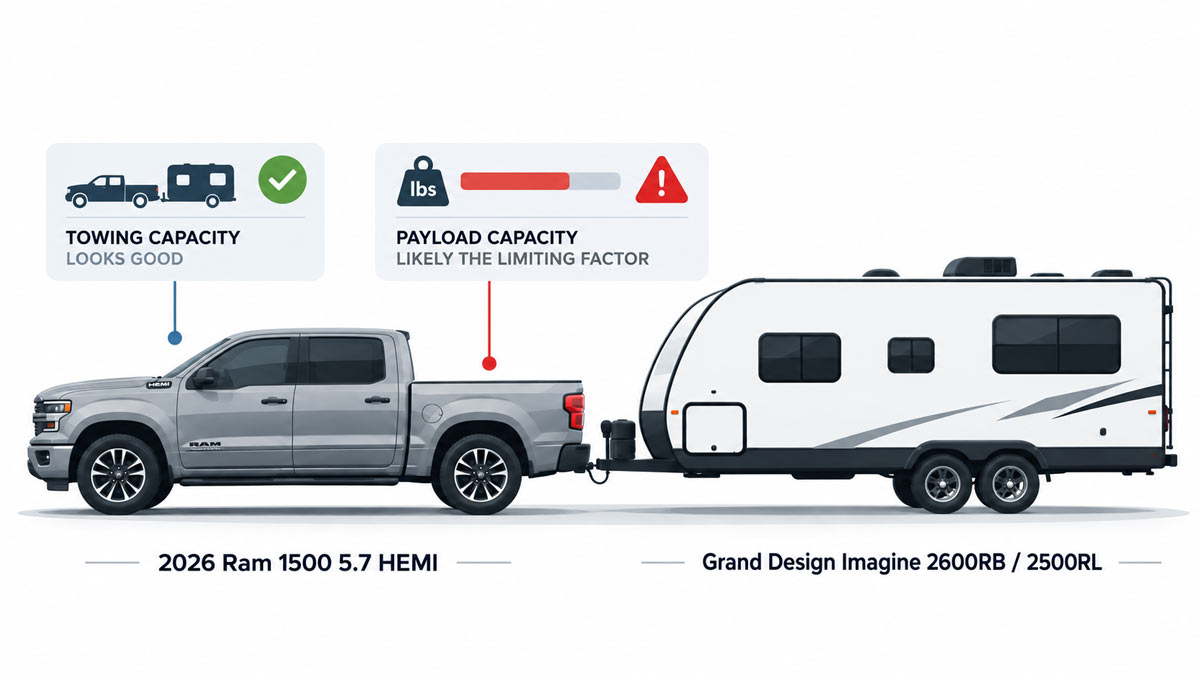
Technically: the engine can pull the weight. The tow rating allows it. But the payload capacity — the actual structural limit of the pickup truck — does not. With this configuration and this trailer at realistic loaded weight, the F-150 XLT SuperCrew 2.7L EcoBoost is overloaded before the wheels turn. The same thing happened to this F-150 King Ranch that ran 1,200 lbs over its door sticker.
The path to making this matchup work involves finding a trailer with a significantly lower loaded weight, reducing the tongue weight below 1,000 lbs, or selecting a different F-150 configuration with a higher payload rating. Not all F-150 configurations have the same payload figure. The door sticker is the only authoritative number for your specific truck.
Most half-ton trucks hit their payload limit long before they hit their tow rating limit — and most owners don’t realize it until they’re already committed. Verify your exact setup and know where you stand.
- Remaining payload (your real limit)
- Realistic tongue weight (loaded)
- GVWR margin + safety buffer
- Clear risk-zone indicator
Best results: use your yellow door-sticker payload number and your loaded trailer estimate (not dry weight).
Run Your Own Numbers
The calculation is always specific to three inputs: your truck's door sticker payload, your trailer's realistic loaded weight (not dry weight), and your actual passenger and cargo weight. None of these can be looked up on a spec sheet. They have to be measured or accurately estimated.
Towing Limit Pro performs this exact calculation with your specific inputs. Enter your door sticker payload, your loaded trailer weight, your passenger count, and your cargo. The app calculates tongue weight at 15% of loaded weight, runs the full subtraction, and gives you a clear Safe / Near Limit / Over Limit verdict. Expert Mode accepts actual scale weights for the most precise result.
Check your door sticker before you hook up anything. That number tells you what your truck can actually handle.