Real Payload Math Before You Buy
By Towing Limit Pro | Payload-First Towing Analysis
Quick Answer
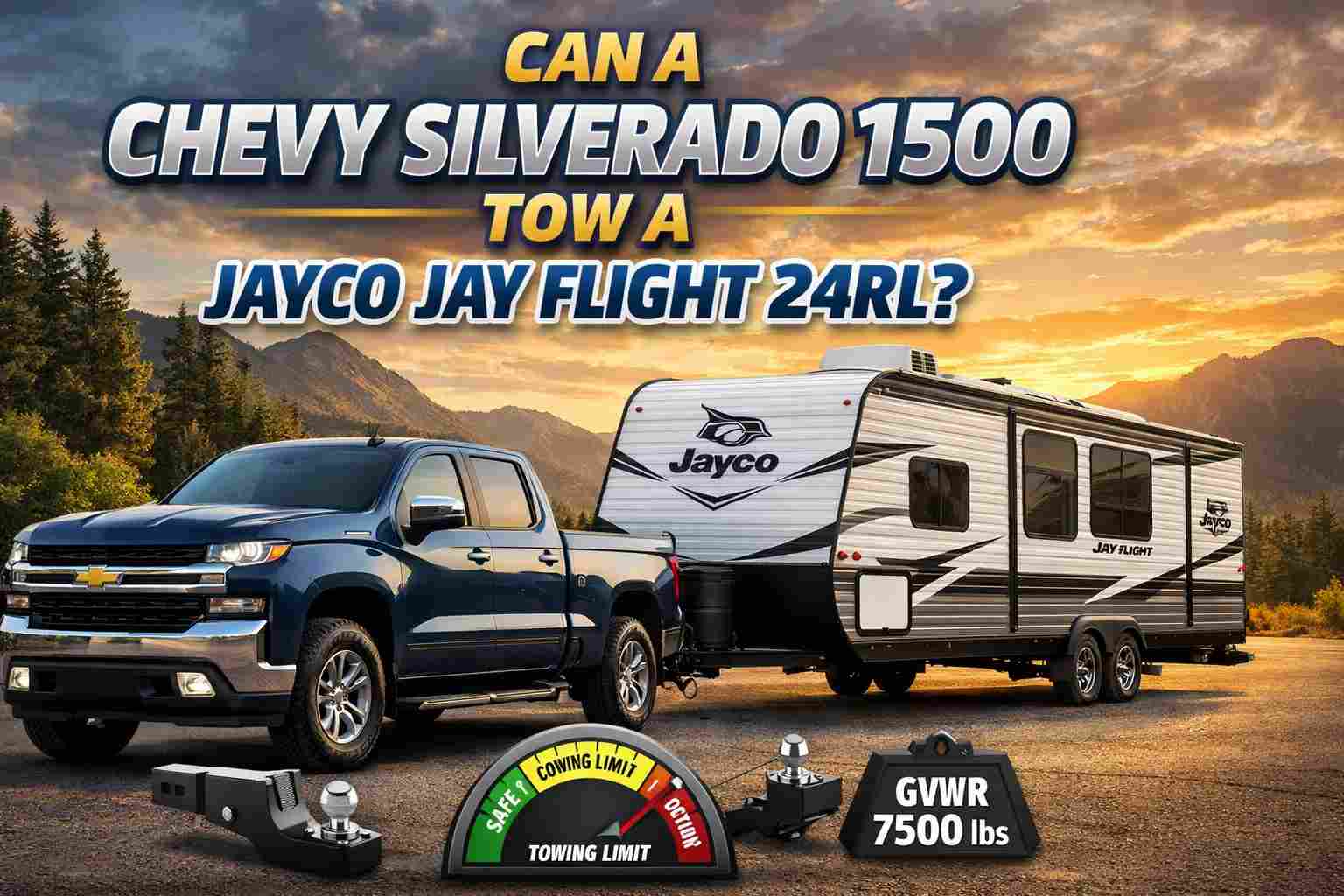
A properly equipped Chevy Silverado 1500 can tow a Jayco Jay Flight 24RL — but whether it can do so safely depends entirely on one number most buyers never check.
Bold clarifier: Your tow rating gets the headlines. Your payload sticker is what actually determines if this matchup works.
The Number Dealers Don’t Lead With
You’ve done your homework. You found a Silverado 1500 with a 9,500-pound tow rating. The Jayco Jay Flight 24RL has a dry weight around 5,800 pounds. On paper, the math looks comfortable.
But here’s where a lot of buyers make an expensive mistake — sometimes before they’ve even left the dealership lot.
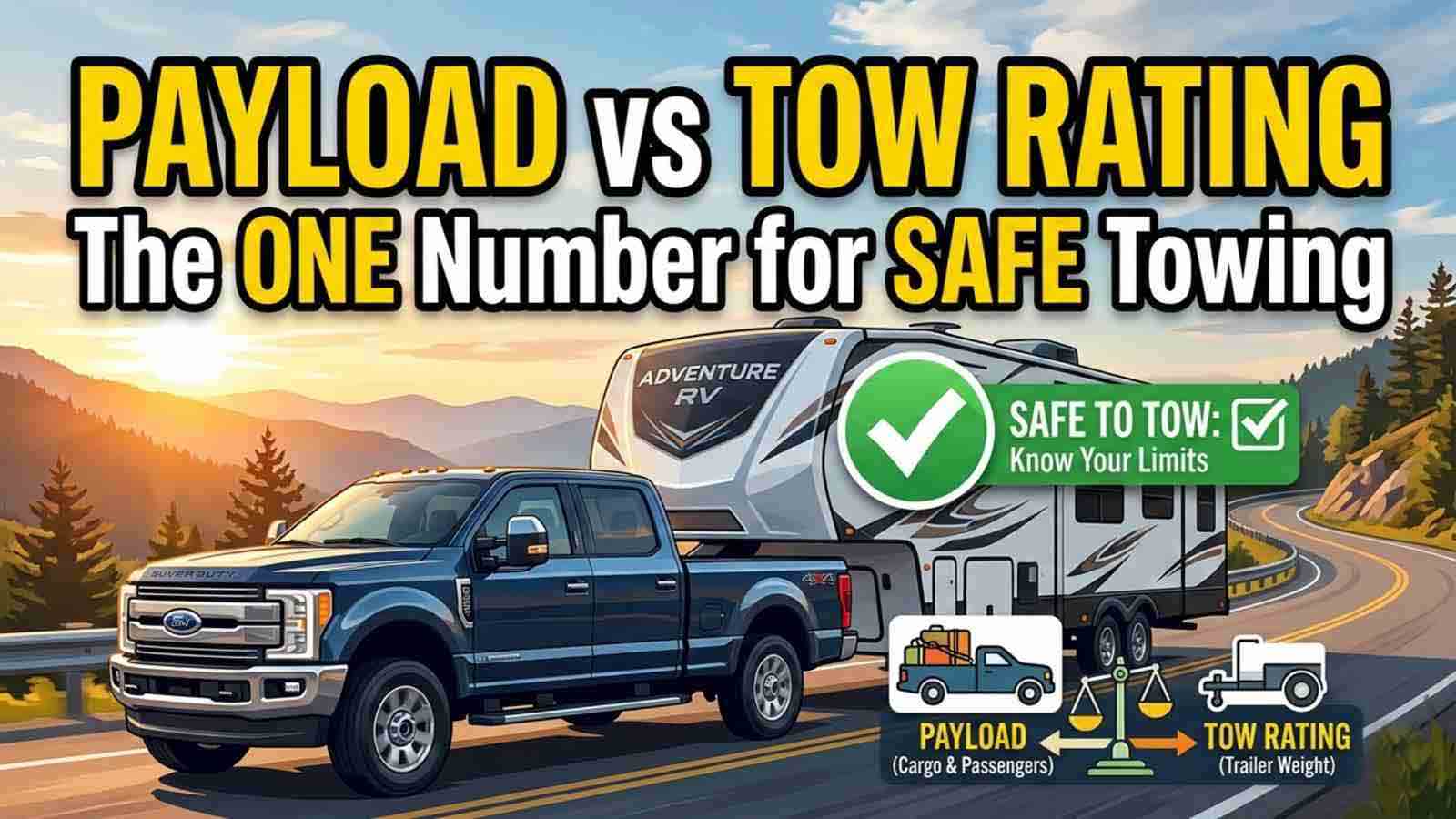
The tow rating tells you how much your truck’s hitch can pull. It says nothing about how much weight your truck can actually carry. Those are two completely different calculations, and only one of them is the one that can get you into serious trouble.
Slightly controversial, but factual: Most half-ton trucks sold today cannot safely tow the trailers they’re being marketed to tow — once you account for real-world loaded weight and actual payload remaining after passengers and gear.
That’s not an opinion. It’s subtraction.
Understanding the Two Numbers That Matter
Before the math, two concepts need to be clear.
Tow Rating is the manufacturer’s maximum for what the truck can pull. It’s calculated under ideal, controlled conditions. It does not account for how much weight is already sitting inside and on top of your truck.
Payload Capacity is the maximum weight your truck can carry — in the cab, in the bed, and through the hitch. This includes passengers, cargo, and tongue weight from your trailer. It’s printed on a sticker inside your driver’s door jamb. This number is what actually limits your setup.
Every pound of tongue weight from your trailer comes directly out of your payload budget. Most buyers don’t know this until after they’ve already bought the trailer.
The Silverado 1500 — What the Specs Actually Show
The Chevy Silverado 1500 is one of the most popular half-ton trucks in America, and it comes with a wide payload range depending on trim, cab configuration, bed length, drivetrain, and options.
Here’s the range you’re working with:
- Payload range: Approximately 1,500 to 2,280 lbs depending on configuration
- Max tow rating: Up to 13,300 lbs (properly equipped)
- Common real-world payload: 1,600–1,900 lbs on typical crew cab configurations
That payload range matters more than any other number on the spec sheet. A Silverado with a 9,500-pound tow rating and 1,580 pounds of payload is a fundamentally different truck than one rated at 13,300 with 2,200 pounds of payload — even if they look identical in the parking lot.
The only way to know your actual payload is to read the sticker in your door jamb. Not the window sticker. Not the brochure. The door jamb.
The Jayco Jay Flight 24RL — Dry Weight Is Not Your Weight
The Jayco Jay Flight 24RL is a popular rear living room floor plan in the mid-size travel trailer category. Here are the key numbers:
- UVW (Unloaded Vehicle Weight / Dry Weight): Approximately 5,800–6,100 lbs
- GVWR (Gross Vehicle Weight Rating): Approximately 7,695 lbs
- Advertised hitch weight (dry): Approximately 740–780 lbs
That dry hitch weight figure is important — and it’s also where the calculation starts to get uncomfortable.
Dry weight means the trailer left the factory empty. No water in the fresh tank. No food. No clothes. No gear. No propane. Nothing.
A realistic loaded Jay Flight 24RL will weigh somewhere between 6,800 and 7,400 pounds depending on how it’s packed. That changes your tongue weight significantly — and your tongue weight is what comes out of your Silverado’s payload.
The 12–15% Tongue Weight Rule
Tongue weight should fall between 12% and 15% of your total loaded trailer weight. This range exists for stability. Too little tongue weight and the trailer is rear-heavy, creating dangerous sway. Too much and you’re overloading your truck’s rear axle.
For a Jay Flight 24RL loaded to 7,200 pounds:
- 12% tongue weight: 864 lbs
- 15% tongue weight: 1,080 lbs
That’s the range you’re working with. And every one of those pounds comes directly out of your Silverado’s payload budget.
Real-World Payload Math: Silverado 1500 + Jay Flight 24RL
Let’s use a common configuration — a 2024 Silverado 1500 Crew Cab with a 5’8″ bed, 4WD, LT trim. A reasonable real-world payload for this setup lands around 1,840 lbs.
| Item | Weight |
| Silverado 1500 Payload Capacity | 1,840 lbs |
| Tongue Weight (13% of 7,200 lbs loaded) | − 936 lbs |
| Driver + One Passenger | − 400 lbs |
| Gear in Cab (bags, equipment) | − 150 lbs |
| Weight Distribution Head + Bars | − 120 lbs |
| Remaining Payload | 234 lbs |
Two hundred and thirty-four pounds.
That’s what’s left between you and an overloaded truck. One extra passenger. A loaded truck bed. A heavier-than-estimated trailer. Any of those close the gap — or eliminate it entirely.
If you’re wondering where your truck would land in this calculation, don’t guess.
Not sure if your truck is within safe limits? Towing Limit Pro helps you verify your real setup using your actual payload sticker, passengers, cargo, and trailer numbers.
- Remaining payload (what you actually have left)
- Realistic tongue weight estimate (loaded, not brochure)
- GVWR margin + a clear safety buffer
- Risk-zone warning if your setup is pushing limits
Tip: Use your truck’s yellow door sticker payload for the most accurate result.
What Happens When You Go Over Payload
This is not about drama. It’s about physics and mechanical reality.
Exceeding your payload capacity puts excess stress on your rear suspension, your frame, and your brakes. Stopping distances increase. Trailer sway becomes harder to correct. Your tires, already carrying maximum load, are now operating beyond their design limits.
Your truck may feel fine. It may even drive fine — at first. But the stress accumulates, and the liability is yours the moment you leave the driveway overloaded.
Insurance and roadside assistance policies have payload limits written into them. An overloaded truck is an excluded vehicle in many scenarios. That’s not a theoretical risk. That’s a contract clause.
Verdict: Can a Silverado 1500 Tow a Jayco Jay Flight 24RL?
Borderline — and configuration-dependent.
This matchup can work. But it requires the right Silverado — not the average one. If your truck came back from the dealer with 1,580 pounds of payload, this matchup is already tight before you add passengers. If you have a high-payload configuration at 2,100-plus pounds, you have significantly more room to work.
The Jay Flight 24RL is not an unreasonable trailer for a half-ton. But it’s not a trailer you can pair blindly with any Silverado 1500 and call it safe.
What you need to know before committing to this matchup:
- Your exact door jamb payload number
- Your realistic loaded trailer weight (not dry weight)
- Your tongue weight at 12–15% of that loaded number
- The total weight of every person and item going in the truck
When you do that math honestly, the picture becomes clear fast.
Know your real margin before you hook up.
Most half-ton trucks hit their payload limit long before they hit their tow rating limit — and most owners don’t realize it until they’re already committed. Verify your exact setup and know where you stand.
- Remaining payload (your real limit)
- Realistic tongue weight (loaded)
- GVWR margin + safety buffer
- Clear risk-zone indicator
Best results: use your yellow door-sticker payload number and your loaded trailer estimate (not dry weight).
Frequently Asked Questions
Can a Chevy Silverado 1500 tow a Jayco Jay Flight 24RL?
Yes, but only with the right configuration. Payload capacity is the limiting factor — not tow rating. A Silverado with 1,580 lbs of payload will be significantly tighter than one with 2,100+ lbs. Always verify your door jamb sticker before assuming the matchup works.
What is the tongue weight of a Jayco Jay Flight 24RL?
The dry hitch weight is approximately 740–780 lbs. When loaded to real-world weights, tongue weight at 12–15% can reach 860–1,080 lbs. This is the number that directly reduces your truck’s available payload.
What is the payload capacity of a Chevy Silverado 1500?
It varies significantly by configuration. The range runs from approximately 1,500 lbs to 2,280 lbs. Crew cab, 4WD, and higher trim levels typically produce lower payload numbers due to added vehicle weight. Your exact number is on the sticker inside your driver’s door jamb.
Does dry weight matter when calculating towing safety?
Dry weight is the starting point, not the number you tow with. A loaded Jay Flight 24RL will typically weigh 800–1,400 lbs more than its dry weight rating. Using dry weight for your calculations produces a false margin that disappears the moment you pack the trailer.
What happens if I exceed my truck’s payload capacity while towing?
Exceeding payload capacity stresses your suspension, brakes, and frame beyond design limits. It increases stopping distance, worsens trailer sway response, and in many cases voids warranty coverage and complicates insurance claims in the event of an accident.