Real Payload Breakdown
The answer your dealer probably won’t give you — and the one number that actually matters.
────────────────────────────────────────────────────────────────────────────────
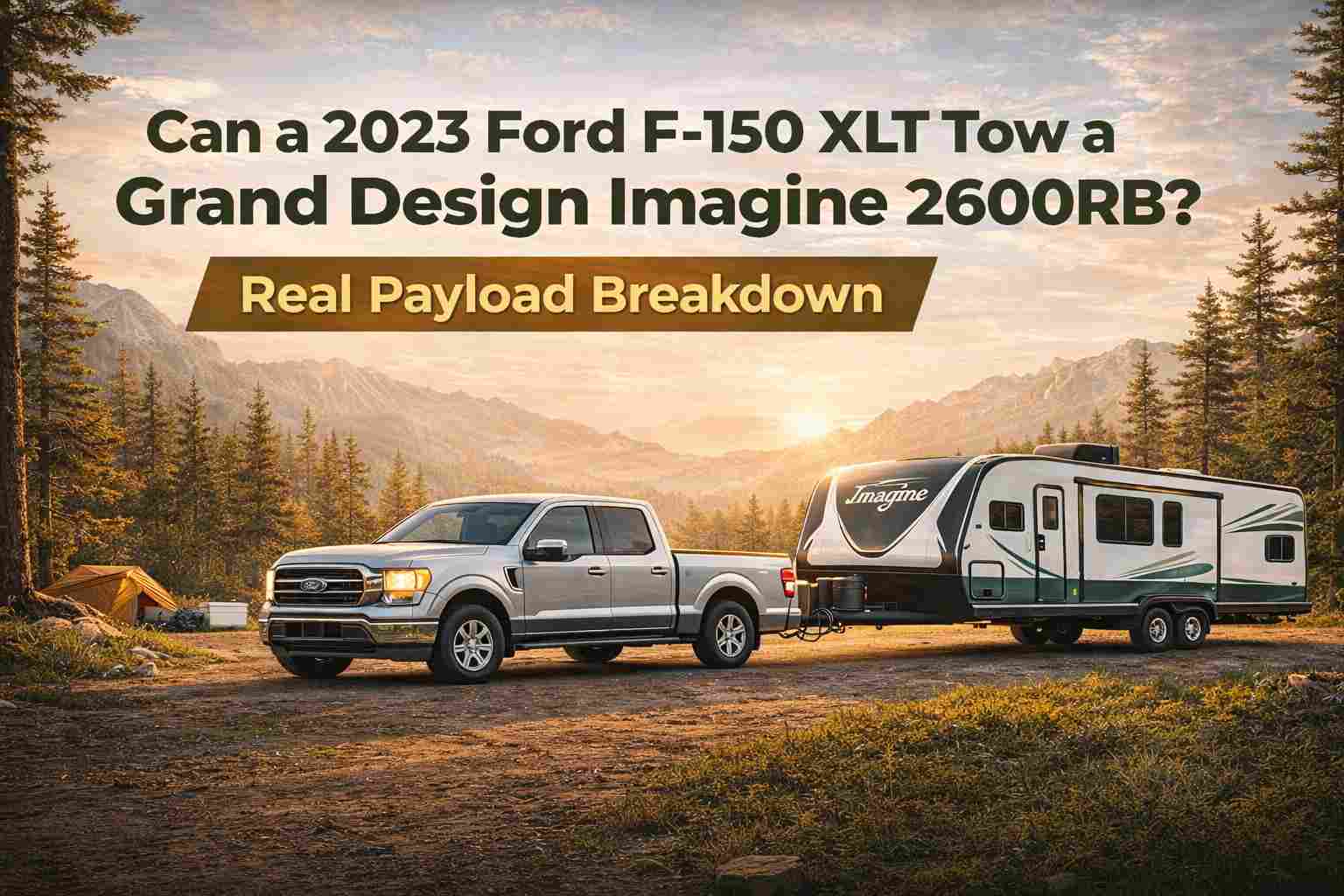
You’ve done the research. You’ve matched up the tow ratings. On paper, a 2023 Ford F-150 XLT looks like it should handle a Grand Design Imagine 2600RB with room to spare.
But here’s the thing most dealers skip right past: tow rating isn’t the number that’ll get you in trouble. Payload is. And for thousands of F-150 owners towing this exact trailer, payload is where things quietly go wrong — often without them ever knowing it.
The mistake most owners make isn’t reckless driving — it’s trusting the wrong number.
────────────────────────────────────────────────────────────────────────────────
Quick Answer
Most F-150 XLT owners will be within 100–200 lbs of their payload limit with this trailer once fully loaded.
Yes — a 2023 F-150 XLT can tow a Grand Design 2600RB in certain configurations.
But many standard trims will exceed payload limits once passengers and cargo are added.
The limiting factor is payload, not tow rating.
Why Tow Rating Alone Will Mislead You Every Time
The 2023 Ford F-150 XLT advertises a max tow rating of around 10,000–11,000 lbs depending on configuration. That sounds like plenty of headroom for a trailer with a 5,800 lb dry weight.
So what’s the problem?
That tow rating is calculated under ideal, controlled conditions — an empty truck bed, a single 150 lb driver, flat roads, perfect weather. Real families don’t tow like that. Real families have passengers, camping gear, coolers, dogs, and a truck bed that’s rarely empty.
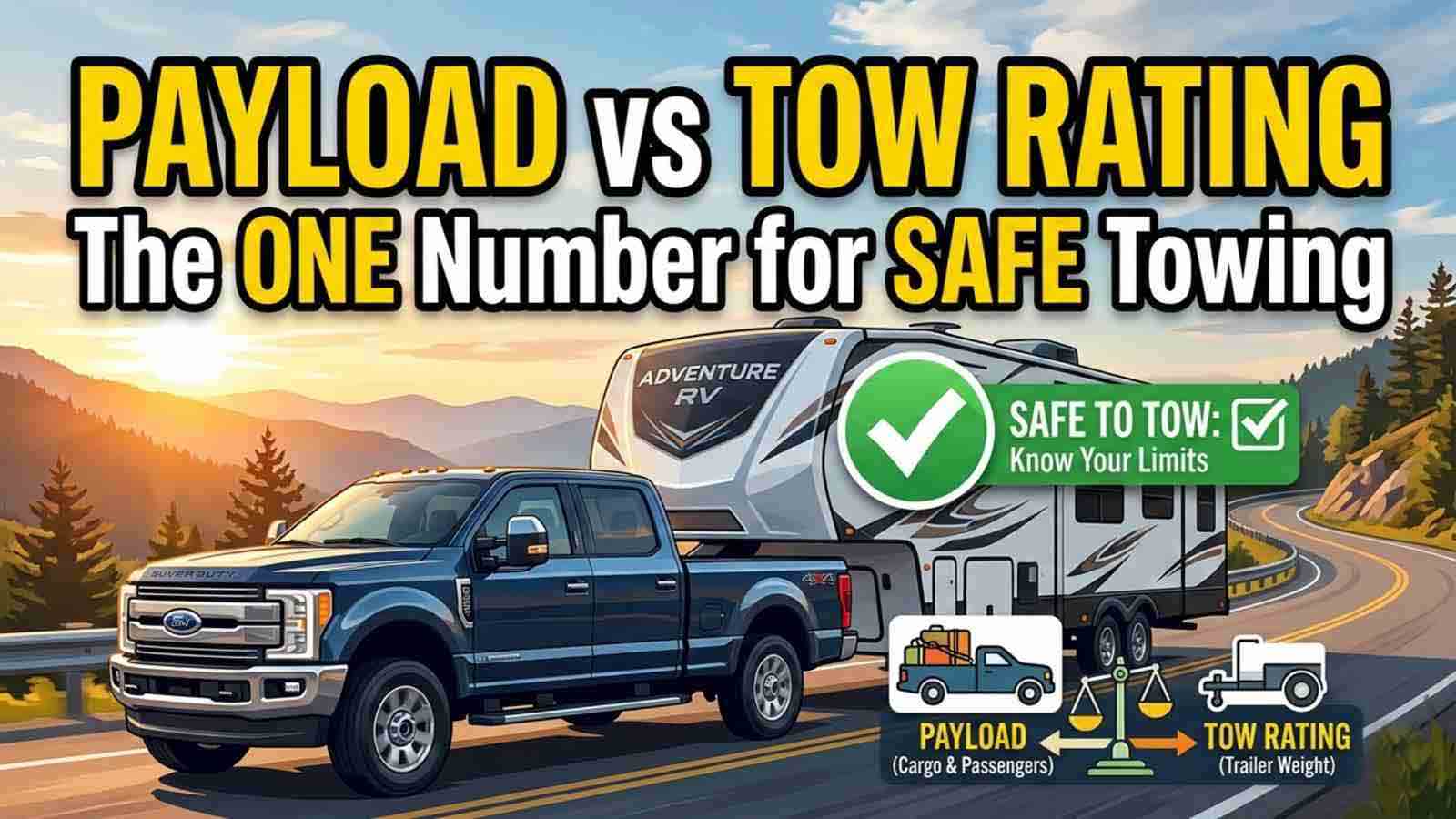
The number that accounts for all of that real-world weight is payload capacity — and that’s the number printed on your yellow door sticker. That sticker is what legally and physically matters.
────────────────────────────────────────────────────────────────────────────────
The Real Numbers: 2023 F-150 XLT Payload
A typical 2023 F-150 XLT sits somewhere in this range depending on engine and trim:
- Max Tow Rating: 10,000–11,000 lbs
- Payload Capacity: 1,650–1,850 lbs
- GVWR: ~7,050 lbs
Your specific door sticker may be lower than these figures. Always check the sticker — not the brochure, not the dealer’s quote, not the Ford website. The sticker.
────────────────────────────────────────────────────────────────────────────────
Why Two Identical-Looking F-150s Can Have Completely Different Payload
Here’s something that catches a lot of truck owners off guard: you and your neighbor could both own a 2023 Ford F-150 XLT, park them side by side, and have payload capacities that differ by 300–400 lbs or more. Same year, same trim, completely different numbers.
So how does that happen?
Payload capacity isn’t just a trim-level figure.
Ford calculates it based on the specific combination of options your truck was built with from the factory — and those options add weight, which directly eats into your available payload.
Engine choice makes a big difference. The 3.5L PowerBoost hybrid, for example, is heavier than the 2.7L EcoBoost.
A heavier engine means Ford has to assign a lower payload rating to keep the truck within its GVWR (Gross Vehicle Weight Rating).
You’re essentially carrying the engine’s extra weight in your payload budget before you’ve loaded a single thing.
Cab size and bed length matter too. A SuperCrew cab with a short bed carries more truck weight than a SuperCab with a longer bed, and that difference shows up directly in your payload number. Longer beds and lighter cab configurations tend to produce higher payload ratings.
Option packages quietly add pounds. The FX4 off-road package adds skid plates and upgraded suspension components. Max Trailer Tow packages add a heavier-duty hitch receiver and wiring.
Moonroofs, upgraded sound systems, running boards — each one adds weight to the truck.
And every pound of added truck weight reduces your available payload by exactly one pound.
Rear axle ratio plays a role. Higher axle ratios can improve tow rating but affect how payload is distributed and calculated across the truck’s weight limits.
The result is that Ford produces hundreds of different payload configurations within the same model year and trim level.
The advertised “up to 2,000+ lbs of payload” figure you’ll see in marketing materials represents the absolute best-case scenario — a stripped-down, single-cab, short-bed, base-engine truck with minimal options.
Most real-world XLT buyers end up considerably lower than that.
This is exactly why the door sticker is the only number that matters. It’s calculated specifically for your truck, as it was built, with every option accounted for.
Two trucks that look identical on the lot can have meaningfully different capacities.
And if you’re buying used or comparing notes with another F-150 owner online, their payload number tells you nothing useful about yours.
When in doubt: open the driver’s door, find the yellow sticker, and use that number. Everything else is an approximation.
────────────────────────────────────────────────────────────────────────────────
The Real Numbers: Grand Design Imagine 2600RB
The 2600RB is one of the most popular travel trailers among half-ton buyers, and it’s easy to see why — on paper, the specs look manageable:
- Dry Weight: ~5,800 lbs
- GVWR: 7,850 lbs
- Advertised Hitch Weight: ~594 lbs
That 594 lb hitch weight figure is the one that tends to trip people up. It’s a dry weight number — meaning it assumes an empty trailer with zero gear, water, food, or supplies inside.
In the real world, tongue weight runs at 12–15% of your actual loaded trailer weight. Load that 2600RB to a realistic 7,400 lbs and here’s what you’re actually looking at:
- At 12%: 888 lbs of tongue weight
- At 15%: 1,110 lbs of tongue weight
That’s a long way from 594 lbs. And that difference is exactly where half-ton trucks quietly get overloaded.
────────────────────────────────────────────────────────────────────────────────
The Payload Calculation That Actually Matters
Let’s run through a real-world scenario using a mid-range F-150 XLT with 1,750 lbs of payload.
Here’s how that payload gets used up before you even hit the highway:
| Item | Estimated Weight |
| Tongue weight (loaded trailer) | 1,000 lbs |
| Driver + one passenger | 350 lbs |
| Gear in truck bed | 250 lbs |
| Weight distribution hitch hardware | 100 lbs |
| Total payload used | 1,700 lbs |
| Remaining payload | 50 lbs |
Fifty pounds. That’s what’s left.
Add a third passenger, a case of drinks in the bed or a heavier hitch setup — and you’re over payload. Legally and physically.
And we are not even including bikes, firewood or a bed cover.
This is how the majority of half-ton trucks end up overloaded — not because the driver was reckless, but because no one showed them the real math.
If you’re wondering where your truck would land in this calculation, don’t guess.
Not sure if your truck is within safe limits? Towing Limit Pro helps you verify your real setup using your actual payload sticker, passengers, cargo, and trailer numbers.
- Remaining payload (what you actually have left)
- Realistic tongue weight estimate (loaded, not brochure)
- GVWR margin + a clear safety buffer
- Risk-zone warning if your setup is pushing limits
Tip: Use your truck’s yellow door sticker payload for the most accurate result.
What Happens When You Exceed Payload?
Overloading payload rarely causes an immediate blowout or dramatic failure. What it does is grind things down quietly and expensively over time:
- Accelerated brake wear
- Excess heat in the transmission
- Rear axle and suspension stress
- Reduced steering response and control
- Increased sway and crosswind instability
- Potential insurance liability if an accident occurs while overloaded
The F-150 is a capable truck. But it can’t defy physics — and neither can any other half-ton.
────────────────────────────────────────────────────────────────────────────────
So Can a 2023 F-150 XLT Tow a Grand Design 2600RB?
Here’s the honest answer:
Yes — if:
- Your door sticker shows 1,900+ lbs of payload
- You’re traveling with one or two people and minimal bed cargo
- You’ve verified your actual loaded trailer weight (not dry weight)
It’s borderline — if:
- Your payload is in the 1,650–1,750 lb range
- You’re towing with a family of four
- You typically carry gear in the bed
Not ideal — if:
- You have a lower payload trim or heavy options package
- You’re doing long-distance or mountain towing
- You regularly tow near max capacity
The difference isn’t which brand you’re loyal to. It’s math.
────────────────────────────────────────────────────────────────────────────────
Stop Estimating. Start Knowing.
Here’s the frustrating part: most truck owners are guessing at these numbers. They’re using brochure specs, dealer quotes, and rough mental math to make a decision that involves tens of thousands of dollars — and real safety consequences.
Towing Limit Pro fixes that in 30 seconds.
You enter your actual door sticker payload, your real passenger weight, and your trailer specs. The app instantly calculates your remaining payload, realistic tongue weight based on actual loaded trailer weight, your GVWR margin, and a clear safety zone indicator — so you know exactly where you stand.
No spreadsheets. No guessing. No calling the dealer and getting a vague answer.
Know your real margin before you hook up.
Most half-ton trucks hit their payload limit long before they hit their tow rating limit — and most owners don’t realize it until they’re already committed. Verify your exact setup and know where you stand.
- Remaining payload (your real limit)
- Realistic tongue weight (loaded)
- GVWR margin + safety buffer
- Clear risk-zone indicator
Best results: use your yellow door-sticker payload number and your loaded trailer estimate (not dry weight).
Frequently Asked Questions
Is the Grand Design Imagine 2600RB actually half-ton towable?
It can be — but a lot depends on your specific truck’s payload, how many people are in the cab, and how loaded the trailer is. Many F-150 owners are right at the edge once real-world weights are factored in. Always calculate before you commit.
Does a weight distribution hitch increase my payload?
No — and this is one of the most common misconceptions in towing. A weight distribution hitch improves ride stability and distributes tongue weight more evenly across axles, but it does not increase your payload capacity. That number is fixed by your truck’s manufacturer.
What’s the largest trailer a 2023 F-150 can safely tow?
It depends on payload, not tow rating. Most half-ton F-150s can comfortably and safely handle loaded travel trailers in the 6,500–7,500 lb range — but only when the full payload calculation is done correctly, accounting for passengers, gear, and tongue weight.
How do I find my truck’s real payload capacity?
Look at the yellow sticker on the inside of your driver’s door jamb. That number is your payload capacity. Use that — not the number on Ford’s website or in the brochure.
────────────────────────────────────────────────────────────────────────────────
Towing Limit Pro is available on the App Store for iPhone. Always verify your towing setup against your vehicle’s door sticker payload before towing.