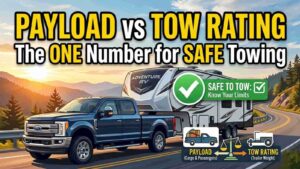
Payload vs Tow Rating: The Number That Actually Determines If You’re Safe to Tow
Most truck owners check their tow rating before buying a trailer. Almost none of them check their payload. That gap — between what the sticker
Most truck owners check their tow rating before buying a trailer. Almost none of them check their payload. That gap — between what the sticker

A properly equipped Chevy Silverado 1500 can tow a Jayco Jay Flight 24RL, but whether it’s actually safe depends entirely on your truck’s payload capacity — not its tow rating.

Most Ram 1500 owners towing a 28-foot Airstream aren’t limited by tow rating — they’re limited by payload, and the margin can be less than 200 pounds.

Most 2023 F-150 XLTs can pull a 2600RB on paper, but real-world tongue weight and passengers often push them to the edge of their payload limit.

Most half-ton trucks don’t max out their tow rating first—they max out payload—so these trailer picks focus on real-world loaded weights, tongue weight, and why a WDH helps stability but doesn’t increase your limits.
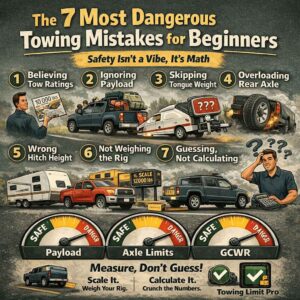
Most dangerous towing mistakes aren’t about confidence or experience—they’re math errors with payload, axles, and tongue weight that turn “within limits” rigs into sway-prone, brake-cooking hazards.
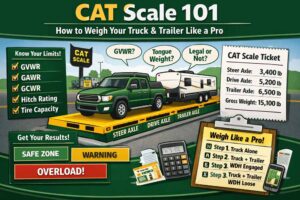
A quick CAT Scale stop replaces towing guesswork with real axle weights, true tongue/pin weight, and clear answers on whether your truck, trailer, hitch, and tires are actually within limits.
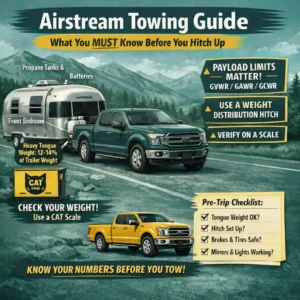
Before you hitch that polished Airstream, learn how its tongue-heavy design eats payload, set your WDH and verify on a CAT Scale—and let Towing Limit Pro handle the math for a safe, legal tow.
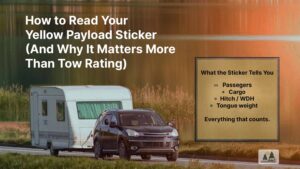
The tow rating sells trucks. The payload sticker keeps families safe. Read it, respect it, and plan around it. When in doubt, weigh.
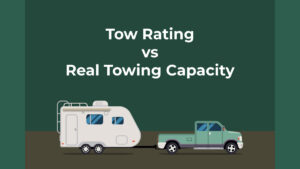
The Complete Guide to Safe, Accurate, and Stress-Free Towing.